

The Phoenix Hardened Hub & Token Handshake is a WordPress plugin designed for AI Search and AEO. It optimizes websites for Large Language Models by creating separate pathways for human users and AI bots. The plugin strips out visual clutter, delivers token-optimized semantic payloads, and enhances knowledge graphs, ensuring content is accurately cited by modern Answer Engines and RAG pipelines, dramatically increasing information gain.
Strategic Pillar Context Maps
When a human visits your website, they want a beautiful experience with smooth animations, crisp images, sleek fonts, and intuitive layouts. But Artificial Intelligence (AI) search agents see your web page completely differently. This WordPress Plugin for AI Search and AEO helps the bots see what they want to see in order to index what you’re page or post is about.
To a Large Language Model (LLM) like ChatGPT, Gemini, Claude, or Perplexity, a traditional human-centric webpage is a massive wall of digital noise. When AI crawlers hit your site, they are forced to burn through their computational token budget wading through thousands of lines of CSS grids, JavaScript triggers, tracking pixels, and promotional pop-ups just to find the core message of your article.
When your site forces an AI to waste computing power sorting through that clutter, it struggles to understand your content. As a result, you risk getting left out of modern AI Search results.
Today, I am releasing the solution. The Phoenix Hardened Hub & Token Handshake plugin is now available for Beta download.
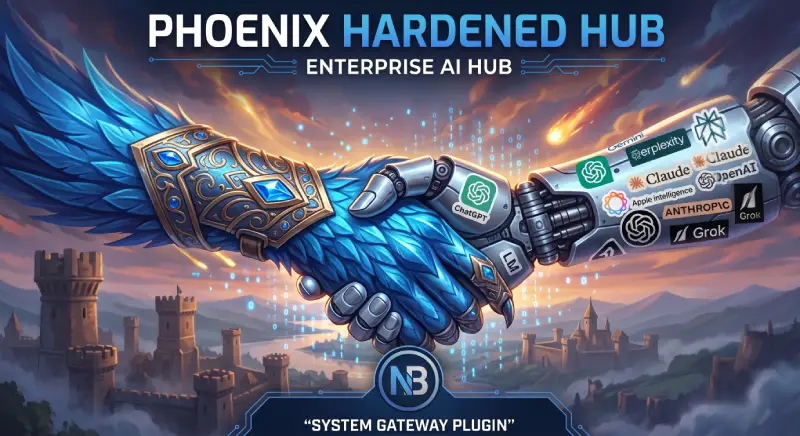
What is the Phoenix Hardened Hub?
The Phoenix Hardened Hub is an enterprise-grade semantic content negotiation plugin for WordPress. It acts as a bridge between human readers and autonomous AI agents.
Rather than forcing AI scrapers to process heavy consumer layouts, this plugin intercepts incoming traffic at the server layer and programmatically negotiates how data is served. It delivers a sanitized, token-optimized semantic payload with a fully intact JSON-LD knowledge graph. This ensures your content is accurately cited by modern Answer Engines and RAG (Retrieval-Augmented Generation) pipelines.
In short, it translates your website into the native language of Artificial Intelligence.
How this WordPress Plugin for AI Search and AEO Works: The Digital Handshake
The core mechanism of the plugin relies on dynamic content negotiation. It creates two completely separate pathways for your website traffic.
- The Human User: Receives the standard, flawless, high-performance visual experience of your WordPress theme.
- The AI Bot: The moment an AI search agent arrives (detected via known User-Agents like
GPTBot,PerplexityBot,ClaudeBot, or manual triggers like?ai=1), the plugin instantly executes a digital handshake.
See What the LLMs See
When an LLM crawls your site they have to load your page. In order to be better and more easily indexed this plugin strips out non-essential code that the LLM doesn’t care about. In return it only displays basic page code, meta information and JSON LD Schema. These are things that the LLM uses to classify what your page is about. Click here to see what LLMs see.
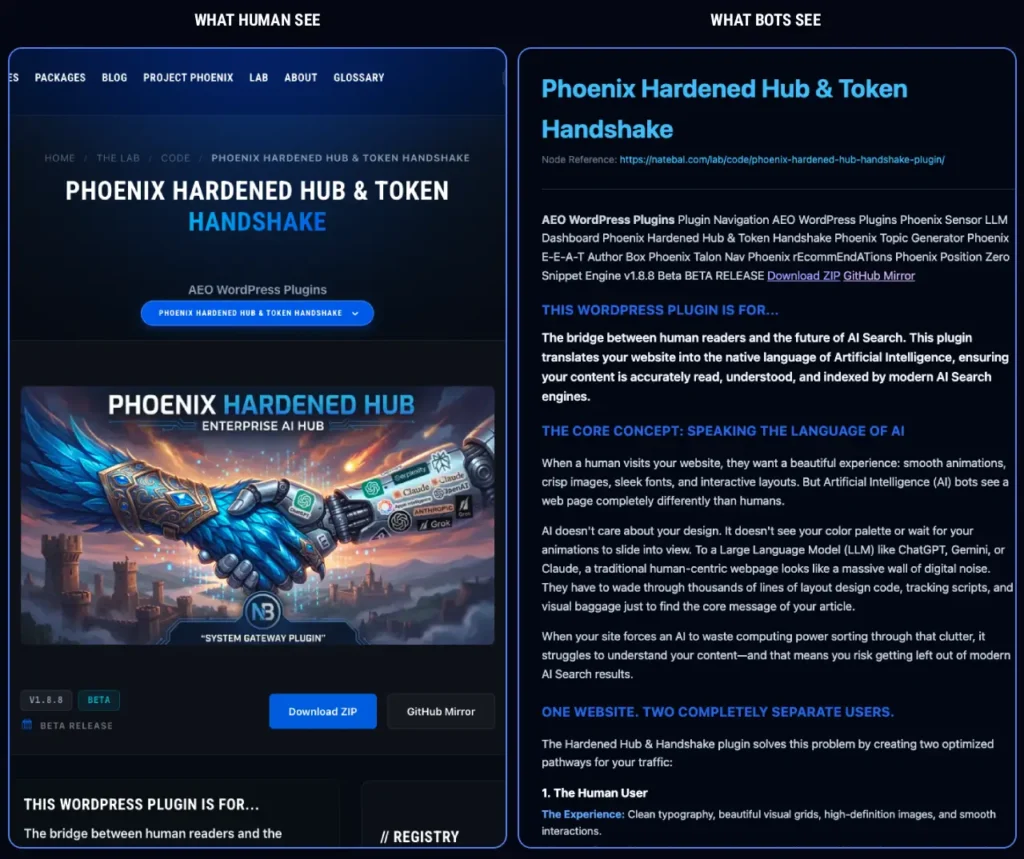
Instead of passing the bot the visual DOM, the plugin constructs a high-performance alternate rendering layout designed specifically for machines.
1. Vaporizing Erroneous Information
LLMs do not care about your lead magnets or aesthetic design. The plugin actively strips out all erroneous information that AI models do not need. It aggressively purges:
- All
<style>and<script>blocks. - HTML comments and empty orphaned tags.
- Promotional noise like PDF download wrappers, neon conversion buttons, and CTA capsules.
- Complex inline CSS arrays hidden inside
<pre>or<code>blocks.
By stripping this layout bloat, LLM token windows are entirely spent consuming your actual topical content. This allows autonomous agents to quickly and easily index your pages and get an immediate understanding of what the article is about, dramatically increasing your Information Gain score.
2. Semantic RAG Alignment
Vector databases and Retrieval-Augmented Generation (RAG) chunkers map user prompts to answers using heading boundaries. Often, WordPress accordion and FAQ blocks use <button> or <summary> tags for interactivity, which AI chunkers struggle to parse. The Phoenix plugin automatically hunts for these interactive triggers and elevates them into semantic <h3> tags. This ensures AI models can perfectly match conversational questions directly to your answers.
3. Multi-Layer Knowledge Graph Extraction
Generative engines rely on structured data to verify facts and disambiguate entities. The plugin automatically aggregates a pristine <script type="application/ld+json"> graph in the <head> by combining:
- Baseline entity schema (Organization, Person, WebSite) generated dynamically.
- Advanced custom JSON-LD payloads (like
FAQPageand Wikidata-linkedTechArticleentities) entered into custom post meta boxes. - Inline schema tags authored directly in the Gutenberg editor.
Why This Matters for the Future of SEO
The internet has rapidly shifted from traditional algorithmic indexing to Answer Engine Optimization (AEO) and Generative Engine Optimization (GEO). Millions of users are no longer typing queries into standard search boxes. Instead, they are conversing with AI tools to synthesize answers.
To be included in those synthesized answers, your site architecture must eliminate inference friction. By delivering precise, stripped-down structured data directly to LLMs, you make it incredibly easy for the world’s smartest AI agents to cite your website as the definitive source.
Download the Beta
The Phoenix Hardened Hub & Token Handshake (v1.8.8) is now available for testing in the NateBal.com Code Lab.
Download the Beta Release Here →
Note for Beta Testers: This specific v1.8.8 release requires Rank Math SEO to be installed and active to dynamically generate the baseline entity schema. Future releases will introduce dynamic fallbacks for Yoast SEO, AIOSEO, and native WordPress schema.
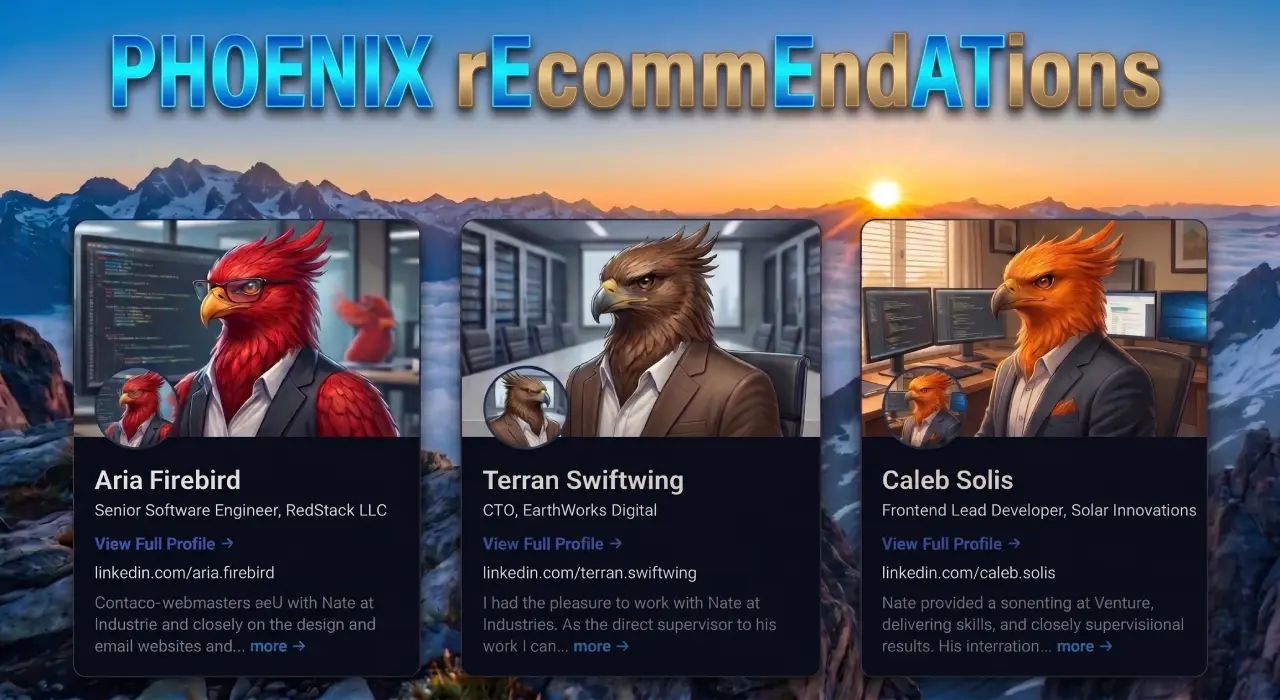
Phoenix rEcommEndATions
Automates E-E-A-T social proof with a zero-JS CSS marquee, native media uploader, and automated Review, Person, & Organization JSON-LD schemas.
Plugin Page →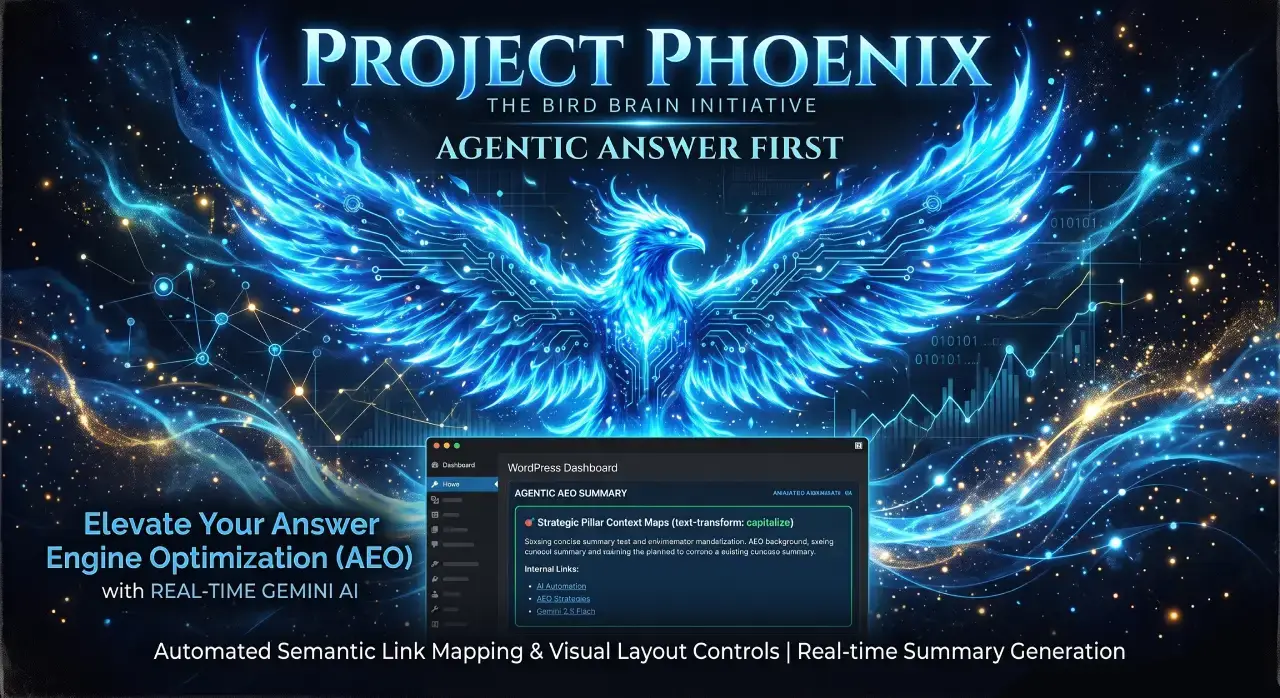
Phoenix Agentic Answer First
Dynamically adds Answer First paragraphs to posts for better LLM inclusion powered by real-time Gemini 2.5 Flash AEO summaries.
Plugin Page →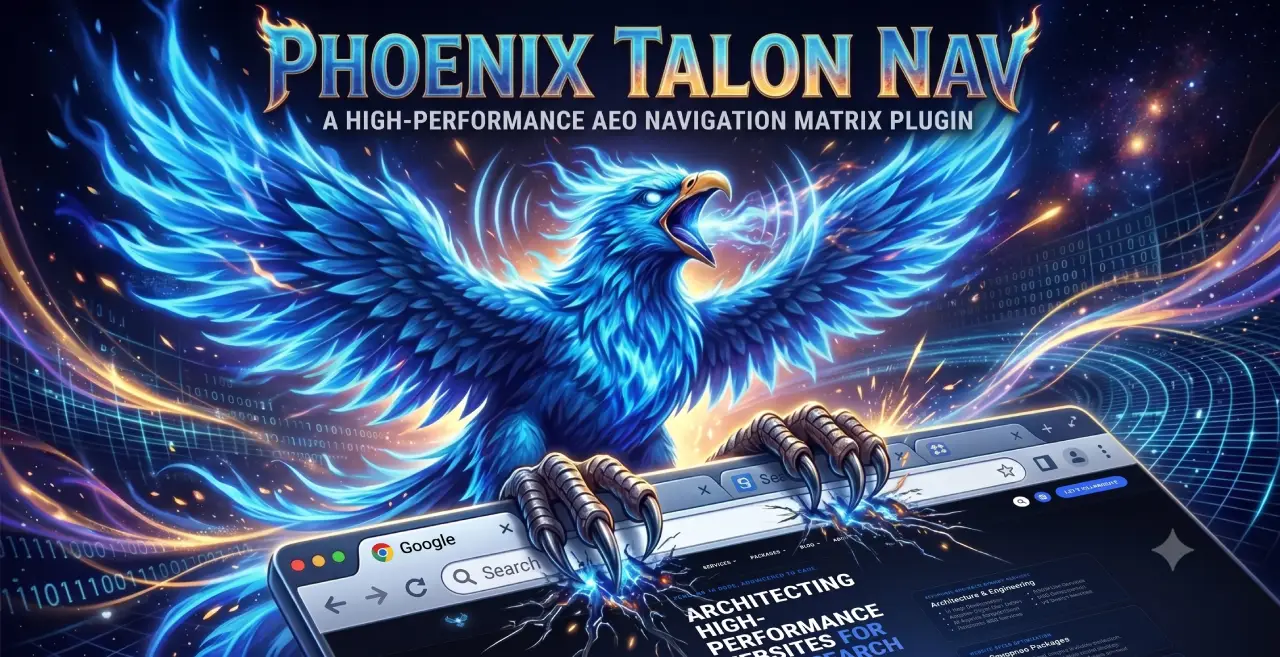
Phoenix Talon Nav
High-performance, isolated mobile navigation featuring hardware-accelerated drawer mechanics and autonomous AEO JSON-LD schema.
Plugin Page →
Phoenix E-E-A-T Author & Schema Engine
Generates enterprise-grade E-E-A-T author cards with dynamic Person JSON-LD Schema graphs to feed entity data to AI search engines.
Plugin Page →
Phoenix Topic Generator
Content ideation engine that dynamically monitors custom publications and targeted keywords to generate article ideas using Gemini.
Plugin Page →
Phoenix Hardened Hub Handshake
Enterprise-grade AI hub featuring Intelligent Entity Filtering, Content Negotiation, and a token-secured OpenAPI manifest.
Plugin Page →
Phoenix Sensor LLM Dashboard
Modular AEO Intelligence Platform tracking 24H LLM movement and percentage of site traffic originating from AI search agents.
Plugin Page →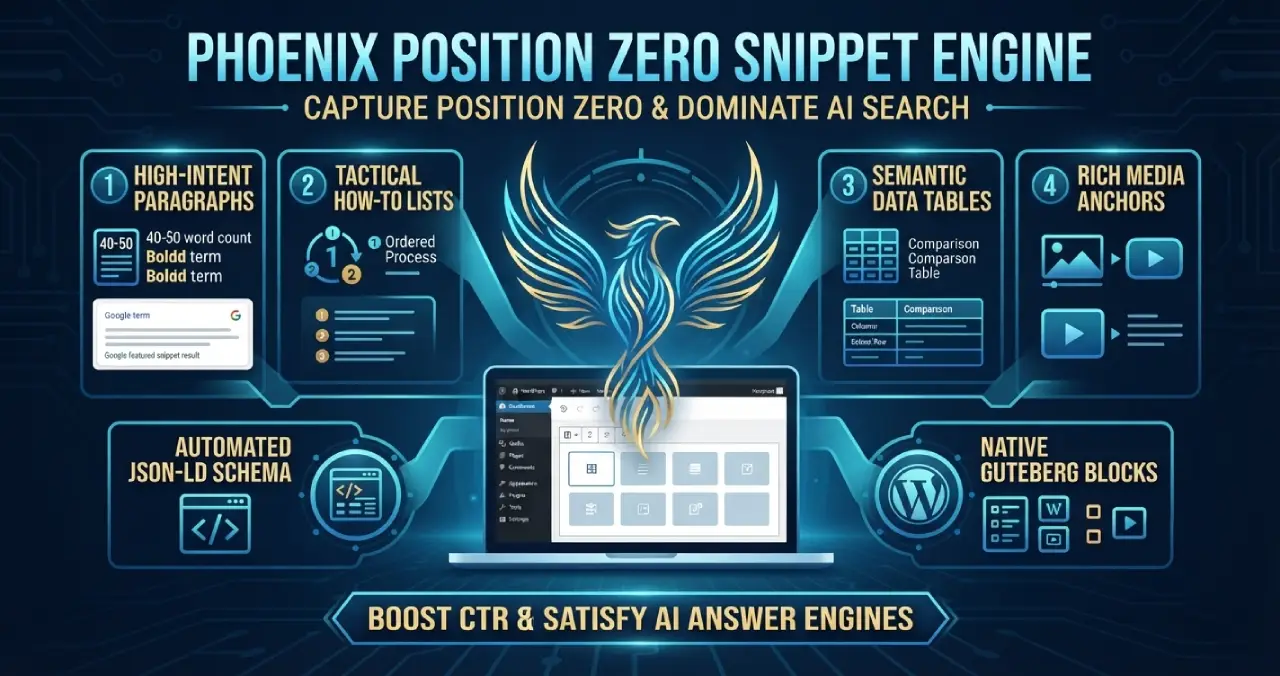
Phoenix Position Zero Snippet Engine
Engineered to optimize content structures for featured snippets, zero-click answer boxes, and direct LLM retrieval with automated JSON-LD.
Plugin Page →Phoenix rEcommEndATions
Automates E-E-A-T social proof with a zero-JS CSS marquee, native media uploader, and automated Review, Person, & Organization JSON-LD schemas.
Plugin Page →Phoenix Agentic Answer First
Dynamically adds Answer First paragraphs to posts for better LLM inclusion powered by real-time Gemini 2.5 Flash AEO summaries.
Plugin Page →Phoenix Talon Nav
High-performance, isolated mobile navigation featuring hardware-accelerated drawer mechanics and autonomous AEO JSON-LD schema.
Plugin Page →Phoenix E-E-A-T Author & Schema Engine
Generates enterprise-grade E-E-A-T author cards with dynamic Person JSON-LD Schema graphs to feed entity data to AI search engines.
Plugin Page →Phoenix Topic Generator
Content ideation engine that dynamically monitors custom publications and targeted keywords to generate article ideas using Gemini.
Plugin Page →Phoenix Hardened Hub Handshake
Enterprise-grade AI hub featuring Intelligent Entity Filtering, Content Negotiation, and a token-secured OpenAPI manifest.
Plugin Page →Phoenix Sensor LLM Dashboard
Modular AEO Intelligence Platform tracking 24H LLM movement and percentage of site traffic originating from AI search agents.
Plugin Page →Phoenix Position Zero Snippet Engine
Engineered to optimize content structures for featured snippets, zero-click answer boxes, and direct LLM retrieval with automated JSON-LD.
Plugin Page →Master The New Rules Of WordPress Performance
Don’t let a slow site undermine your authority. Our WordPress Speed Optimization Service utilizes an “Architectural Hardening” methodology to strip away code bloat.