Published: March 20, 2026 – Last Updated 3 days ago by Nate Balcom

Traditional SEO didn’t disappear, but old SEO habits are losing power fast. Publishing more content is no longer enough. Search engines and AI assistants now prefer pages that are clear, structured, and easy to quote. That is why Interface SEO for Position Zero is now a practical growth strategy for designers, developers, and AEO specialists.
This guide shows you how to build content that earns featured snippets, appears in “People Also Ask,” and improves your odds of citation in AI answers—without turning your site into spam.
How to Use Interface SEO for Position Zero
What changed in search behavior?
People no longer search the same way they did a few years ago. They ask complete questions, expect direct answers, and often stop after one useful response. In many cases, users never click ten blue links anymore. They read a concise answer in a snippet, overview, or assistant response.
This changes what “good SEO content” looks like.
A page can be long and still fail. A page can be short and still win. The difference is structure and clarity. Interface SEO for Position Zero works because it treats each section of your page as an answer block that can stand alone.
If your content is easy to parse, engines can extract it. If your content is hard to parse, engines skip it.
Want the implementation checklist?
Download the free Interface SEO for Position Zero checklist (PDF, DOCX, or Google Doc) and use it before every publish.
PDF | DOCX | Google Docs
Is SEO actually dead?
Not exactly. Outdated SEO tactics are dying. Strategic SEO is evolving.
What is fading:
- Keyword stuffing
- Thin listicles with no proof
- Clickbait headlines with weak substance
- Generic content written for algorithms instead of users
What is growing:
- Entity-rich content
- Answer-first formatting
- Clear semantic hierarchy
- Fast, accessible UX
- Structured data that supports understanding
So “SEO is dead” is a strong headline, but the real truth is this: Interface SEO for Position Zero is the modern layer that makes SEO perform in AI-era search.
What is Interface SEO for Position Zero?
Interface SEO for Position Zero is the practice of designing pages as answer interfaces, not just blog layouts.
It combines:
- Technical SEO
- UX and visual hierarchy
- Information architecture
- Entity SEO
- AEO formatting
- Structured data
In plain language: you publish content so both humans and machines can quickly find the exact answer, trust it, and reuse it.
A helpful way to think about it:
- SEO used to ask, “Can we rank this page?”
- Interface SEO asks, “Can we extract the answer from this page with high confidence?”
How Interface SEO for Position Zero works like an answer system
Most sites write like libraries: lots of pages, hard to scan, and answers buried in paragraphs. Interface SEO for Position Zero writes like a tool: it delivers the answer first, then proves it.
That’s why the page behaves like a system:
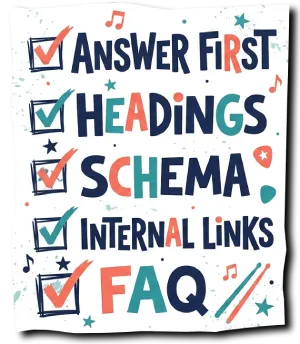
- The opening contains a direct response.
- Headings match real questions.
- Definitions appear before jargon becomes a barrier.
- Each section stays focused on one intent.
- FAQs mirror the follow-up questions users ask next.
- Schema matches what is actually visible.
When this is done well, your content becomes reusable—by humans skimming, by search engines extracting, and by AI assistants summarizing.
Why designers should care
Designers shape comprehension. Comprehension shapes extraction. Extraction shapes visibility.
That means your typography, spacing, contrast, heading hierarchy, and content blocks influence whether your answer gets cited or ignored.
Design patterns that help:
- One clear H1 that communicates the main intent
- Logical H2/H3 flow that follows user questions
- Short paragraphs (so each idea is extractable)
- High contrast body text (so it’s readable on every device)
- Summary boxes before deep detail
- Tables/checklists for frameworks and comparisons
- Consistent “answer blocks” that repeat across sections
A practical designer mindset for Interface SEO for Position Zero:
If a reader only sees your headings, can they still answer the question? If an AI system extracts just one section, does that section stand on its own? Your layout should make extraction natural, not accidental.
Why developers should care
Developers control semantic structure, rendering performance, and technical clarity. That is foundational for Interface SEO for Position Zero.
Implementation basics:
- Semantic HTML (
article,section,header,nav,aside) - Proper heading order (H1 once, then H2/H3 in a clear hierarchy)
- Crawlable links and canonical consistency
- Fast page load + stable layout
- Valid structured data that matches visible content
- Clean internal anchor links (so users can jump directly to answers)
If content strategy is the blueprint, development is the foundation. Without clean implementation, even strong writing underperforms.
If you want a deeper starting point, pair this guide with:
- 10 Amazing SEO-Friendly Coding Practices for Web Developers
- Ultimate 7-Step Guide: How to Add Schema Markup to Websites for SEO
How AI assistants choose sources
AI systems tend to prefer pages that are:
- Explicit and direct
- Topically coherent
- Entity-consistent
- Well-structured
- Supported by clear context
They can detect vagueness quickly. They also down-rank fluff. Interface SEO for Position Zero helps because it reduces ambiguity and improves answer extraction quality.
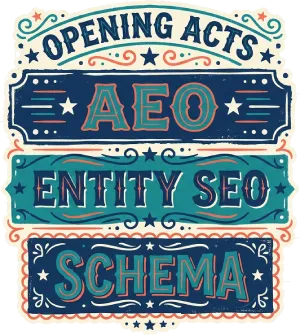
Ask yourself before publishing:
- Is the core question answered in the first section?
- Is every heading tied to user intent?
- Can one paragraph be quoted without extra context?
- Does schema reflect what is actually on the page?
- Are important entities defined clearly?
- Are you contradicting yourself across sections?
- Does the page “flow” when read as sections rather than as a full story?
The goal isn’t to trick a model. It’s to make your expertise unmissable.
The practical framework: 10 moves that win position zero
These 10 steps are the operational core of Interface SEO for Position Zero.
1) Lead with a direct answer
Start with a concise answer in the first 100 words. This increases snippet and summary eligibility.
2) Use question-based headers
Use natural-language questions that mirror real user queries.
3) Define key entities early
Clarify terms like AEO, entity SEO, schema, and position zero.
4) Keep one topic per section
Avoid mixed-topic paragraphs. Keep answers modular.
5) Add proof and implementation detail
Screenshots, examples, code snippets, or case notes outperform vague advice.
6) Build internal entity links
Link to related posts intentionally so engines see your topical network.
7) Add FAQ blocks
FAQ format is highly extractable and strong for People Also Ask.
8) Validate schema every time
Use BlogPosting and FAQPage where relevant and keep it aligned to visible content.
9) Optimize readability and speed
Fast pages and clean formatting improve engagement and trust signals.
10) End with action
Give users a checklist, template, or next-step framework they can use immediately.
You’ve got the strategy—now grab the execution sheet.
Download the 25-point checklist and turn this framework into a repeatable workflow.
PDF | DOCX | Google Docs
What “answer architecture” looks like on the page
If you want your page to behave like an answer interface, structure it like components:
Component 1: Direct answer block
A short opening that answers the query, followed by a brief “why this matters” context.
Component 2: Definition block
A compact section that defines key terms. This often fuels citations because definitions are quote-friendly.
Component 3: Framework block
A list, table, or ordered steps that map to what the reader wants to do next.
Component 4: Proof block
Examples, screenshots, code snippets, or implementation notes. This is where trust is built.
Component 5: FAQ block
Multiple Q&As that match real follow-up questions.
Component 6: Measurement block
How to evaluate success beyond simple ranking.
This is how Interface SEO for Position Zero turns content into an interface the reader can operate.
How to measure success (beyond rankings)
Position zero and AI citations aren’t measured only by “where you rank.” Track outcomes that correlate with answer visibility.
Track:
- Featured snippet wins
- PAA appearances
- AI referral traffic patterns
- Scroll depth and engagement on Q&A sections
- Internal click-through to service pages
- Leads assisted by informational content
- Branded search lift over time
A useful practical workflow:
- Pick one target question per page.
- Monitor snippet and PAA changes.
- Review analytics: engagement depth and internal clicks.
- Update the sections that users skip.
Interface SEO for Position Zero is working when your content gets discovered, understood, cited, and converted.
If you’re already focused on featured snippets, this companion post can help:
Common mistakes to avoid
Avoid these mistakes if you want the interface to be extractable and trustworthy.
- Delayed answers in long intros
- Repetitive keyword blocks
- Inconsistent terminology for the same concept
- No FAQ section (or FAQs that don’t match real questions)
- No proof or examples (opinions don’t extract well)
- Invalid or mismatched schema (schema must reflect visible content)
- Weak internal link architecture (you need topical networks, not isolated pages)
- Over-editing for optimization instead of clarity
The goal is clarity and usefulness, not density theater.
E-E-A-T is still the quiet gatekeeper
AI-era visibility is not “trick the model.” Models and search engines both behave more cautiously around topics where trust matters.
Interface SEO doesn’t replace credibility. It amplifies it.
Interface SEO for Position Zero should include proof in the interface, not only in the copy:
- A visible author line with relevant credentials (even one sentence helps)
- Dates for published and last updated when you materially improve the page
- Primary sources where claims are sensitive (policy, health, money, legal)
- Examples that show real implementation detail (even anonymized)
If your page is beautifully structured but thin on credibility, you may still lose to a messier page that is trusted. Structure gets you considered. Trust gets you cited.
Before-and-after: what changes on the page
Before (classic blog pattern):
- Long intro, meandering story, keyword mentions
- Tips buried halfway down
- Headings that are clever but not query-shaped
- No FAQ
- Schema missing or mismatched
After (Interface SEO for Position Zero pattern):
- A direct answer in the opening
- Definitions early
- Headings written like real questions
- Modular sections
- A checklist or table for frameworks
- FAQ near the end
- Schema aligned to what users actually see
This is not “writing for robots.” It is respecting the reader’s time while making machine interpretation easier. The same changes that improve snippets usually improve comprehension, shareability, and conversions.
Maintenance beats one-time optimization
Position-zero style visibility is not permanent. Competitors update. SERP features change. Your product changes.
Schedule a 90-day refresh for pillar content:
- Add two to four new FAQ questions based on Search Console queries and comments
- Tighten any section that analytics shows people skip
- Replace outdated examples
- Revalidate schema after edits
- Add one new internal link to a fresh supporting article
A maintained pillar reinforces the idea that your site is a living resource, not a one-off opinion piece. That consistency supports long-term performance for Interface SEO for Position Zero as a repeatable publishing standard, not a single post.
Frequently Asked Questions
What is Interface SEO for Position Zero?
Interface SEO for Position Zero is a method for structuring pages so answers are easy to extract, cite, and trust.
Is traditional SEO dead in the AI era?
Traditional SEO isn’t dead, but outdated tactics are fading as answer-first content becomes dominant.
How do AI assistants choose which pages to cite?
AI assistants prefer pages that are explicit, well-structured, and semantically consistent with visible evidence.
What schema helps with position zero visibility?
BlogPosting and FAQPage are the most useful schema types for article clarity and Q&A extraction.
How can designers improve AI search visibility?
By making the answer legible and extractable through strong hierarchy, scannable typography, clean layout, and clear section separation. If readers (and extractors) can quickly locate the answer, visibility improves.
How can developers implement answer-first SEO?
Use semantic HTML, proper heading structure, fast and stable rendering, crawlable internal linking, and validated schema that matches visible content. Ensure each section can stand alone as an answer block.
What is the difference between SEO and AEO?
SEO targets classic search visibility, while AEO (Answer Engine Optimization) focuses on being summarized, cited, and surfaced in AI-driven answer contexts. They overlap in intent and clarity, but AEO requires extra emphasis on extractable answer formatting.
How do I measure AI-era SEO performance?
Track snippets, PAA visibility, AI referrals, engagement depth, and assisted conversions—not rankings alone.
Final takeaway
The old strategy was volume.
The new strategy is answer architecture.
If your team builds pages that explain fast, prove clearly, and guide action, you can win visibility across classic search and AI surfaces. That is exactly what Interface SEO for Position Zero is designed to do.
If you want to outperform bigger sites, don’t publish more noise. Publish better interfaces for answers.
If this guide helped, take the next step
Get the free Interface SEO for Position Zero checklist and apply it to your next post in 15 minutes.
PDF | DOCX | Google Docs

 |
Web Design Services: Custom, responsive sites with stunning UX/UI, fast load times & SEO-ready code. Convert visitors into customers. More >> |
 |
Search Engine Optimization Services: Boost your site's visibility with tailored keyword research, on-page optimization & analytics. Drive organic traffic! More >> |
 |
WordPress Services: Custom themes, WooCommerce, speed & SEO optimization. Secure, scalable sites that rank higher & convert better. More >> |