



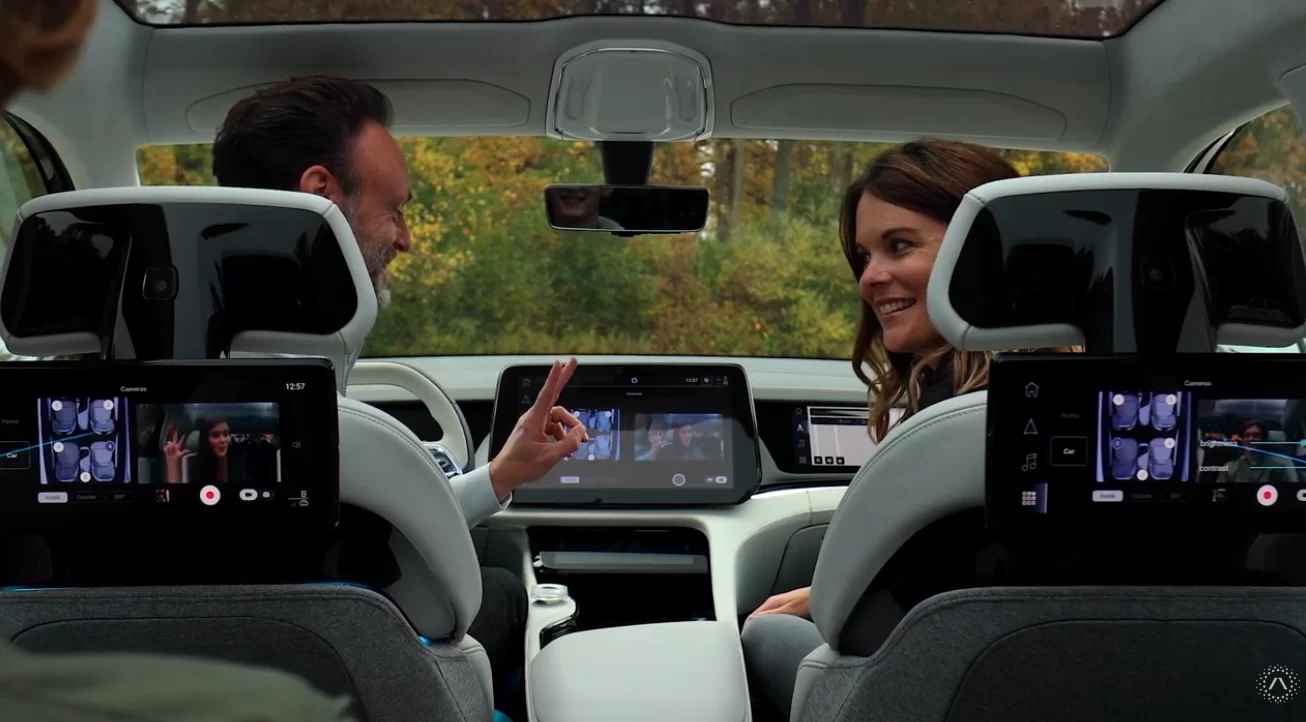
This prototype featured seven screens that together told a cohesive story of functionality. The animations across the instrument cluster, head unit, lower control screen, passenger screen, and two rear-seat entertainment screens were powered by a combination of Raspberry Pis and Intel NUC mini pcs connected through a local network. Node.js was used to coordinate the system, creating a seamless, synchronized story experience. The 2022 Airflow Concept vehicle was meant to tour the auto show circuit, but was cut short due to COVID.
Bridging Aesthetic Vision and Technical Reality
When approaching the Airflow concept, my primary responsibility was taking ownership of the entire prototype technology stack and making the physical model work. The core challenge wasn't just visualizing a futuristic cabin experience, but actually engineering the underlying interface architecture so it functioned seamlessly under real-world automotive constraints.
Working side-by-side with the physical modeling groups, I designed and programmed the core technology to link the hardware with the digital displays. Every screen setup, animation curve, transition state, and touch response was rigorously built and optimized to ensure a flawless, real-time user experience.
Architecting Multi-Modal Human-Machine Interfaces
Modern automotive prototypes demand more than static screens. They require a cohesive ecosystem where digital displays, haptic feedback, and spatial audio operate in absolute unison. For this project, I engineered the interactive models that bridged interior design aesthetics with advanced software logic. By setting up the screens and building modular UI components, I created a flexible framework capable of adapting to shifting user contexts. This ensured the hardware and software performed seamlessly whether the vehicle was transitioning through autonomous transit, active manual drive, or parked media-sharing modes.

Prototyping for Production-Ready Precision
Moving from initial concept sketches to a high-fidelity CES presentation model requires a disciplined digital prototyping workflow where the technology has to perform reliably live. This phase involved close cross-functional collaboration with the modeling teams to map out complex user journeys, manage system state transitions, and translate raw design intent into functional, production-ready interaction code. The result is a fully realized human-machine interface that proves how hands-on technical architecture and meticulous programming can bring ambitious automotive concepts to life.

Adding Digital Screens to the Physical Prototype

Airflow Concept Model 2020

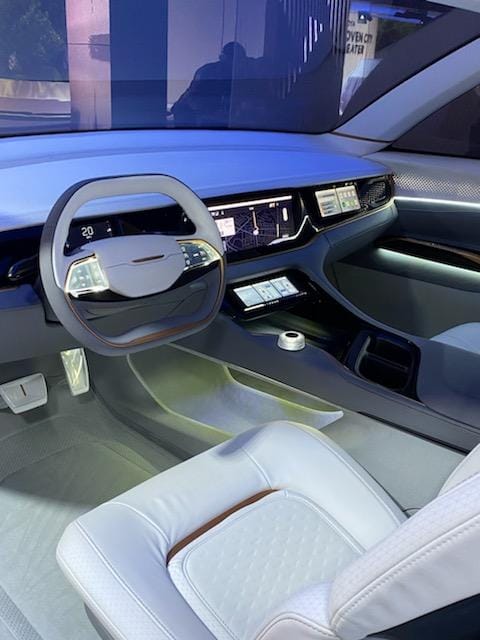
Airflow Concept Interior Front Seat

Airflow Concept Battery Stack

Airflow Concept

Airflow Concept Interior Front Seat
Airflow Concept Vehicle

Airflow Concept Model 2020

Airflow Concept

Airflow Concept

Airflow Concept Model Exterior CES 2019

Airflow Concept Model Interior CES 2019

Airflow BUC Construction

Airflow Concept Exterior
Airflow Concept Top Down Glass Roof

Airflow Concept Interior Front Seat

Airflow Concept Wake Screens

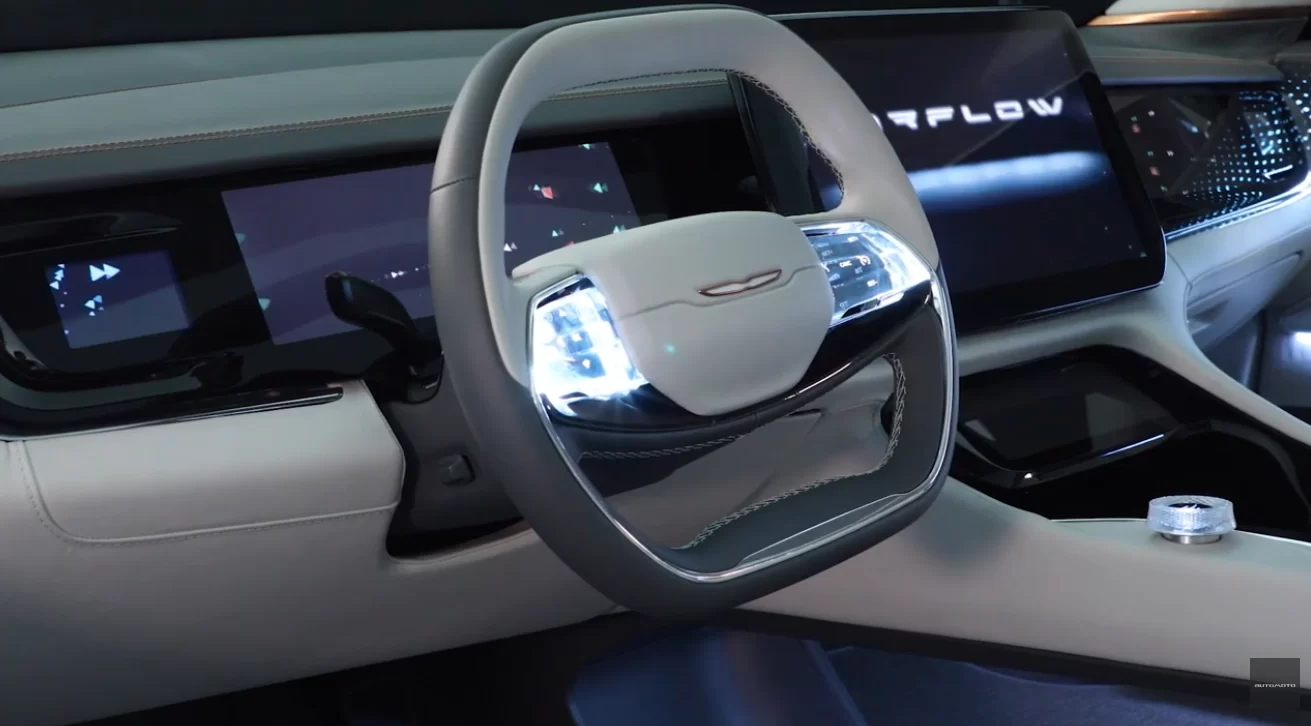
Airflow Concept Steering Wheel

Airflow Vision Concept

Airflow Concept Model Interior CES 2019

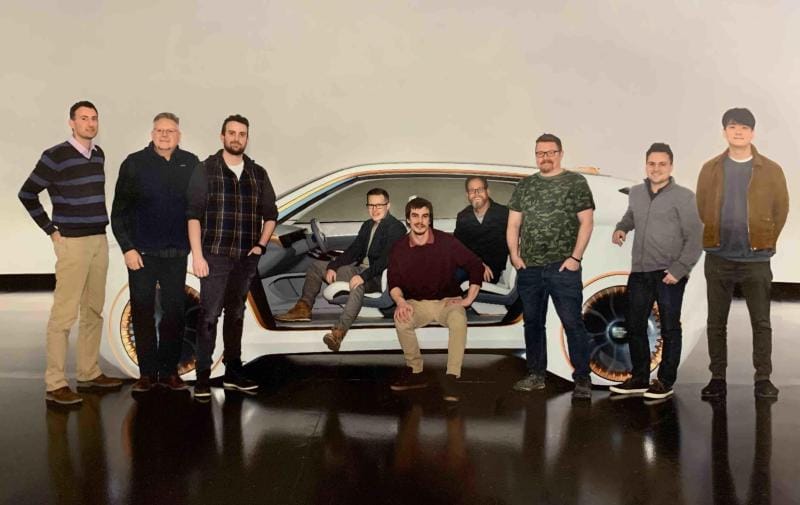
Airflow Concept Interior Design Team

Airflow Concept Steering

Airflow Concept Drawing

Airflow Concept Model Interior CES 2019

Airflow Concept Interior Rear Seat Entertainment (RSE)

Airflow Concept Model Interior

Airflow Concept Model Interior CES 2019
Airflow Concept Videos

Auto Shows
- Consumer Electronics Show Debut January 5, 2022
- Chicago Auto Show February 9, 2023
- New York International Auto Show (NYIAS) April 13, 2022
- Cancelled show tour due to COVID

