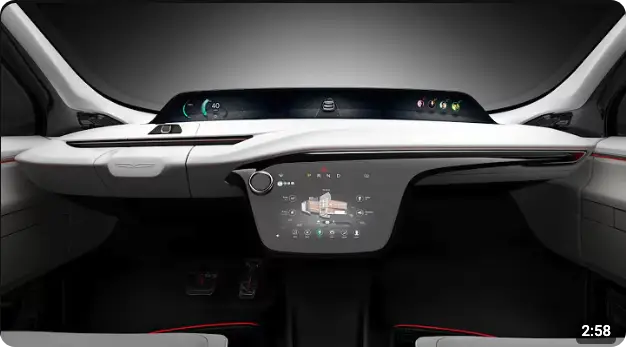
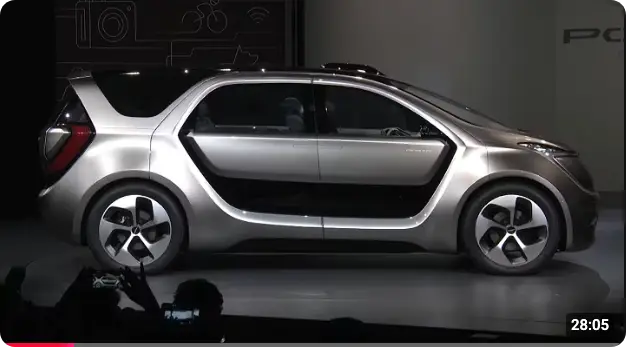
As a User Experience Designer in Chrysler's Product Design Office (PDO), contributed to the 2017 FCA Chrysler Portal Concept vehicle, creating user-centered digital and physical interaction models for next-generation family transit. Designed cross-device connectivity and seamless media-sharing workflows anchored by IBM Watson’s cognitive user profiling. Enhanced in-cabin usability by integrating biometric facial recognition for automated personalization, independent directional audio zones for distraction-free listening, and ergonomic touchpoint interactions across multi-screen display systems.
The Cognitive Cabin Core: IBM Watson Integration
Building on the architectural foundation of the interior experience, the concept centered on moving away from traditional, isolated dashboard controls and toward a fully unified, living cabin ecosystem. By integrating IBM Watson as the cognitive core, the vehicle transformed from a mere mode of transportation into an intuitive, responsive partner capable of anticipating passenger needs, interpreting complex contextual cues, and orchestrating the entire cabin environment in real time.

Distributed Processing and Synchronized Spatial Audio
Beneath this centralized intelligence lay a robust distributed processing network driven by 11 on-board computers, ensuring seamless execution across every touchpoint. This immense computational power seamlessly synchronized with omnidirectional spatial audio to dynamically steer audio cues, notifications, and communication to specific zones within the vehicle without disrupting other occupants.
Seamless Personalization and Shared Ecosystems
Furthermore, the architecture seamlessly bridged personal profiles with shared devices, allowing passengers to effortlessly migrate their digital workspaces, media preferences, and climate configurations the moment they stepped inside, creating a deeply personalized yet collectively harmonious journey.
Professional Portfolio & Case Study Version
Engineered as a seamless "third space" bridging home and work, the Portal centered on adaptive, collaborative usability:
- Zero-Friction Personalization & Biometrics: Powered by cognitive computing (IBM Watson) and Panasonic’s infotainment architecture, the vehicle utilized facial recognition and voice biometrics to automatically detect approaching passengers and configure individual seat positions, preferred climate settings, and lighting profiles.
- Personal Audio Zones: Integrated directional acoustic zones allowed passengers to stream independent audio sources (such as navigation, podcasts, or entertainment) simultaneously without requiring headphones or causing acoustic interference for other occupants.
- Cross-Device Social Sharing & Media Hub: Passengers could dock or wirelessly connect their mobile devices to share playlists, navigation waypoints, and photos across the cabin’s high-mounted OLED displays with intuitive swipe-to-share gestures.
- Cognitive Profile Management: IBM Watson functioned as the central cognitive brain, continuously learning passenger preferences, managing group interaction dynamics, and reducing driver cognitive load.
- Spatial Ergonomics & Ingress Usability: Beyond the digital layer, usability extended to the physical cabin through pillarless articulating sliding doors that provided a wide, 5-foot entryway for effortless loading, alongside an in-floor track system for modular, sliding, and removable seats.

Portal Concept Interior
FCA Portal Concept Drawing

2017 FCA Portal Concept Interior

Chrysler PortaaChrysler Portal Concept Interiorl Concept Interiorx

Portal Concept CES 2017 - FCA Team

2017 FCA Portal Concept Front Seat Interior

2017 FCA Portal Concept Exterior Cameras

FCA Portal Concept Drawing

2017 FCA Portal Concept BUC

Portal Concept CES 2017

FCA Portal Concept Exterior Lights

Chrysler Portal Concept Auto Show

2017 FCA Portal Concept Exterior Lighting

2017 FCA Portal Concept Interior RSE

FCA Portal Concept

2017 FCA Portal Concept

Portal Concept CES 2017 - Interior

Portal Concept CES 2017 Dual Sliding Doors

2017 FCA Portal Concept Exterior

Chrysler Portal Concept Vehice

Portal Concept CES 2017 - Interior Screens

2017 FCA Portal Concept Dual Sliding Doors

FCA Portal Concept Doors Open

2017 FCA Portal Concept Front Seat Interior

Portal Concept CES 2017 - Interior Seating

Chrysler Portal Concept

Portal Concept Videos