
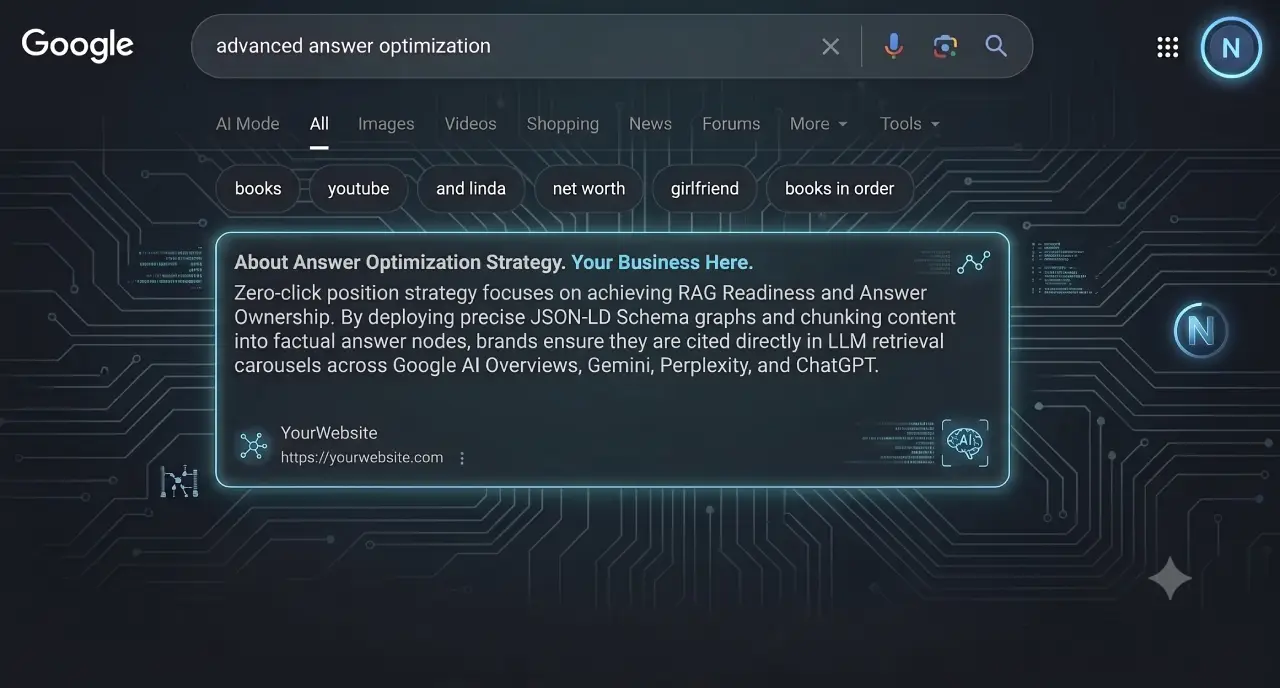

Mastering How to Get Mentioned in Google AI Overviews is crucial for modern businesses. The search landscape has shifted from traditional links to conversational answer ecosystems, where Google synthesizes information directly. To combat dropping traffic and ensure visibility, businesses must adapt their digital architecture for AI search, focusing on structured data, clear content, and technical optimization to be featured in these critical snapshots.
Strategic Pillar Context Maps
Learning How to Get Mentioned in Google AI Overviews is the most urgent puzzle modern business owners need to solve if they want to survive online. The internet changed while everyone was busy arguing over keywords. If you have noticed that your standard marketing strategies are suddenly yielding fewer leads, you are not imagining things. The search landscape has fundamentally shifted from a collection of blue links to a conversational answer ecosystem.
For twenty years, a successful digital presence required a predictable loop: write a page, build a link, rank at the top, and watch a human click through to your site. Today, Google’s algorithms synthesize the web’s collective knowledge and present it directly inside a neat snapshot at the absolute top of the page. If your business is not inside that snapshot, you are effectively invisible to your target market.
How to Get Mentioned in Google AI Overviews Checklist
Why Is My Website Traffic Dropping in 2026?
This is the exact question keeping digital marketers awake at night. You look at your tracking software, verify your positions are stable, yet your actual phone calls and form submissions are slipping away.
The explanation is simple: the introduction of zero-click searches has permanently disrupted traditional data collection models. When Google presents a flawless summary of a problem right inside the search results, users no longer have an incentive to click through to an external site. They read the summary, extract the immediate value, and leave. This behavior cuts off the top of your marketing funnel before a human ever sets foot on your landing page.
Why Are My Google Clicks Dropping Even Though My Rankings Are the Same?
It feels like a glitch in the matrix. Your analytical suite proudly reports that your core services are still holding the number one slot, but your transaction ledger looks like a ghost town. This discrepancy occurs because holding a traditional organic ranking no longer guarantees human eyes on your copy.
When an artificial intelligence summary occupies the top six hundred pixels of a smartphone screen, the traditional organic results are pushed down below the fold. You are technically winning an archaic ranking war while losing the actual battle for consumer attention. The layout of the screen has simply evolved past the click economy, leaving standard business sites stranded in the background.
Uncover Your Hidden Website Bottlenecks
A slow or poorly optimized website quietly drives away valuable traffic and hurts your search rankings every single day. Get a comprehensive analysis of your site’s speed, user experience, and technical health to see exactly where you might be losing potential customers. Claim your free performance report today to start turning technical fixes into measurable business growth.
What Percentage of Web Traffic Am I Losing to Google AI Overviews?
Current industry data paints an intense picture for businesses that fail to adapt. Early operational audits show that informational and educational search strings are experiencing a thirty to forty percent reduction in direct click-through rates.
When a user searches for an answer, the algorithm retrieves the data, displays it inside the text box, and satisfies the intent instantly. This means that if your revenue model relies on users browsing through informational blog posts to discover your brand, your traditional discovery pipeline is drying up. You are losing the top-of-funnel traffic that historically converted into paying clients.
Is AI Search Stealing Traffic from Small Business Websites?
It is not intentionally malicious, but the structural outcome is exactly the same. The algorithm values speed and direct utility above all else. If a local service provider’s platform consists of basic paragraphs with no structured underlying code, the machine cannot confidently extract its facts.
The engine will naturally favor large aggregators or perfectly coded alternatives that can be safely sliced into bullet points. The traffic is not being stolen; it is being rerouted to platforms that speak the exact linguistic language of the retrieval model. Small businesses using legacy themes are feeling the crunch first.
What Is the Difference Between Traditional SEO and AI SEO?
Traditional Search Engine Optimization focuses primarily on indexing pages for human selection. It relies heavily on keyword densities, metadata alignment, and a high volume of domain backlinks to prove authority. The goal is to make a page look relevant enough to land on a high position on a list.
Artificial Intelligence Search Optimization focuses on optimization for concept extraction. The models do not merely scan for matching letters; they attempt to understand the contextual relationship between entities, actions, and solutions.
Legacy Web Optimization: Keywords -> Backlinks -> Rank on a List -> Human Selection
Modern AI Optimization: Structured Data -> Concept Chunks -> Retrieval -> Automated Synthesis
To bridge this gap successfully, you must transition your digital architecture to a comprehensive answer engine optimization framework that caters directly to automated data collection filters. This framework shifts your focus from tracking words to owning complete conceptual nodes within your industry silo. Read our comprehensive operational breakdown on getting cited by Google AI Overviews for more options if you have a WordPress website.
Does Ranking #1 on Google Still Matter if the AI Answers First?
Holding a standard top spot still has value, but its function has completely transformed. It is no longer the final destination for consumer traffic; it is the primary training ground for the search summary.
The machine constructs its daily overviews by pulling data directly from top-ranking assets. If you rank number one but fail to structure your text for machine parsing, the engine will use your competitor’s data to build the answer block instead. Winning the top slot is now just the first step: you must also format that slot to be easily digestible for the crawler.
How Does AI Read My Website Content?
The software processes your platform through a technique known as chunking. It strips away your beautiful CSS layouts, ignores your color palettes, and breaks your written copy down into clean, standalone sentences and data points.
Raw Text: "We have been providing premium high-performance web development and AI search services out of Lake Orion for over eight years."

Parsed Chunk: [Entity: NateBal.com] -> [Service: High-Performance Web Development] -> [Service: AI Search Optimization] -> [Location: Lake Orion, MI] -> [Experience: 8+ Years]
The algorithm passes these text fragments through an evaluation pipeline to check for factual consistency, mathematical validity, and layout structure. If your text is filled with open-ended fluff or circular logic, the model flags it as a low-confidence asset and drops it from the retrieval sequence entirely.
What Kind of Content Does Google Gemini Like to Feature?
The machine favors text that displays absolute clarity and structural authority. When evaluating single documents, the engine hunts for clear, declarative statements that can be easily dropped into automated summaries. To ensure your insights line up with these precise generative engine optimization guidelines, your writing must lead with direct answers followed immediately by verified supporting data.
The algorithm prioritizes text that leaves no room for ambiguity, favoring definitive guides over speculative commentary. It values concise tables, bulleted frameworks, and direct answers to complex queries.
The Strategic Blueprint: How to Get Mentioned in Google AI Overviews
When analyzing How to Get Mentioned in Google AI Overviews, we have to examine the direct mechanics behind Google's retrieval models. The algorithm does not guess which site is best; it runs an automated calculation to find the most mathematically confident answer.
Securing a direct reference inside the premium layout frame requires an intentional combination of clean front-end composition and advanced back-end data engineering. To build a clear roadmap for your business, look at the core vectors required to satisfy these modern extraction crawlers.
The table below maps out the primary actionable frameworks required to optimize your digital assets for automated overview discovery.
| Optimization Vector | Technical Action | Operational Outcome |
| Data Structuring | Deploy advanced JSON-LD Schema markup | Gives the engine verified, machine-readable facts instantly |
| Content Typography | Write in strict question-and-answer chunks | Allows the parser to extract clean sentences for bulleted summaries |
| Core Web Vitals | Drop server lag and layout shifts below 100ms | Prevents automated crawlers from abandoning high-latency pages |
| Authority Mapping | Weave verified credentials and author bios into pages | Solidifies the platform's trust indicators for model evaluation |
Step-by-Step Layout: How to Get Mentioned in Google AI Overviews

The secret to landing inside the citation carousel is creating content that acts as an undeniable single source of truth. When the engine builds an overview, it needs to link to its sources to maintain credibility. You can earn these premium links by following a strict technical blueprint.
First, structure your subheadings to match the exact conversational questions your target clients are typing into their screens. Second, use a data-first approach: instead of stating that your service is highly efficient, provide the exact percentages and operational case metrics that prove it. The algorithm views precise data as a high-signal authority metric, making it highly likely to feature your asset in the summary block.
How to Optimize Website for AI Search
To transform a legacy business platform into a modern, AI-ready asset, you need a developer who can move comfortably between multiple digital disciplines. Most traditional agencies pass your project along an assembly line: a designer builds a layout that looks pretty but runs slowly, a programmer builds code that ignores marketing intent, and a writer creates text that ignores structural code schema.
When you focus on How to Get Mentioned in Google AI Overviews, you are fundamentally altering your deployment strategy. True optimization requires an integrated approach. You need a technical partner who handles the entire development lifecycle as a cohesive system, which is where my unique cross-disciplinary skillset comes into play:
- The UX Expert: Architects an intuitive interface that keeps human metrics perfect, signaling to the machine that real users find immediate value on your page.
- The Programmer: Builds clean source code with optimized asset delivery, dropping your page speeds straight into the green zone.
- The AEO Professional: Crafts structured schema blocks and precise text chunks that allow automated parsers to safely retrieve your brand's facts.
By consolidating these technical skills into a single fluid pipeline, you eliminate the communication gaps that traditionally lead to bloated, slow websites. You get a single point of execution for design, code, data structure, and optimization, anchoring your platform firmly to the answer engine optimization hub of your industry.
Clearing Up the Tech Myths
The sudden shift in the search landscape has naturally led to a massive amount of confusion and misinformation across the business community. Let us debunk the primary optimization myths directly so you can focus on real performance drivers.
Can Google Penalize AI Content on My Site?
The short answer is no; the algorithm evaluates quality rather than the method of generation. The search engine has explicitly clarified that it prioritizes original, helpful copy that demonstrates real-world experience, regardless of whether a human or a machine assisted in the production process.
However, if you use automated tools to churn out thousands of low-value, repetitive pages purely to manipulate keyword rankings, your site will face a steep drop in visibility. The focus must always remain on formatting high-utility assets that give immediate answers to consumer inquiries. Factual accuracy and clear formatting matter infinitely more than the hand that typed the keys.
Will ChatGPT Reduce My Website Clicks?
Yes, OpenAI's conversational tools will continue to capture a significant share of traditional informational search traffic. When a user asks a platform like ChatGPT to compare two distinct software models or summarize an operational process, the user gets their answer without ever visiting a website.
To combat this traffic erosion, your optimization playbook must evolve. You need to deploy highly detailed, actionable answer engine optimization tips to ensure that when a consumer asks an AI tool for a recommendation, your business is the specific entity the model extracts and presents as the premier option. You must optimize to be the answer the model outputs.
Do Backlinks Still Matter for AI Search, or Do I Just Need FAQs?
Backlinks are still incredibly important, but their structural role has evolved. In traditional SEO, a backlink was treated like a simple vote of popularity. In the AI search ecosystem, a link is analyzed as a bridge of contextual validation.
The machine evaluates your inbound link network to verify that your business data is consistently referenced by other authoritative entities within your market space. FAQs are fantastic for providing quick, bite-sized facts for overview boxes, but external links remain the foundation that validates your underlying business authority. The model uses links to cross-reference your factual integrity before citing you.
Step Into the Next Era of Search Performance
The internet is no longer a passive directory of links. It is a highly competitive, automated intelligence network that demands absolute technical perfection from your web property. If you continue to fight tomorrow's visibility battles with yesterday's fragmented marketing playbook, your digital storefront will simply fade into an artificial intelligence ghost town.
The path to discovering How to Get Mentioned in Google AI Overviews does not require a massive panel of disconnected consultants. You need a dedicated, multi-disciplinary partner who understands exactly how to align elegant user experiences with advanced machine readability. By combining deep user experience design with native code engineering and structural AI optimization, I build systems that rank, perform, and convert.
Take the First Step: Analyze Your System
Do not let the changing algorithms leave your business behind. It is time to run a complete technical reconnaissance sequence on your platform to uncover exactly what is blocking your brand from premium discovery filters.

Really enjoyed reading this. this topic is becoming more important in 2026. Wishing you continued success with the blog.
Thanks Boyd. It’s as important if not more as we transition into writing for the second reader. As the Internet continues to evolve these are things you have to pay attention to in order to be included in modern search.